
Theofilos (Theo) Vasileiadis
Co-founder & CEO
Entrepreneur, co-founder and Chairman of Kariera Group, and founder of Flow22. Brings experience building technology businesses and commercial partnerships.
LinkedIn
License your proprietary code for AI training. Keep ownership.
No source code needed for an initial estimate.
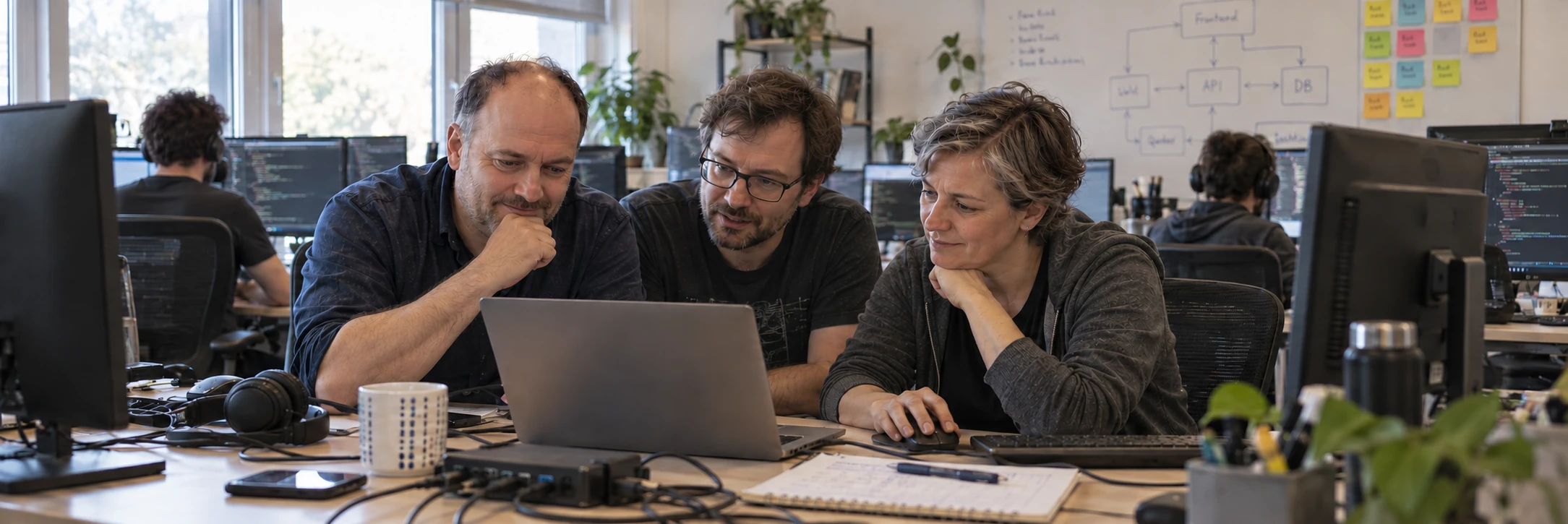
Private code can provide examples of real software that are unavailable in public repositories. Suitable applications, internal tools and discontinued products may qualify for paid AI-training licences.
Stackworth22 helps assess suitability, organise the initial information and coordinate discussions with specialist licensing partners.
Answer five questions for an illustrative licensing estimate. No source code or contact details needed.
Select a question to read the methodology.
The main factors are the lines your company wrote itself, counted once; commit history; tests and CI; and how different the code is from public code.
The code must be private and owned by your company or available for you to license. If any part was previously public, the formal sizing form measures it and the payout is lower. This quick estimate cannot measure the code itself.
The estimate considers code size, original code content, previous public exposure, available Git history and build/test readiness. It uses a model calibrated to indicative licensing examples dated 1 November 2026. These examples guide the initial discussion; formal sizing and review determine the amount.
Where fuller Git history or working tests could improve the submission, we show the potential for a higher payment and explain what is needed. This is an indicative opportunity, subject to formal sizing and technical review.
Figures are approximate and rounded to give a broad indication. The 1–2 million code-size reference is interpolated and needs closer review. An exclusive licence can increase the value, depending on the terms agreed. This estimator does not assume an exclusivity premium. Final payment depends on what is eligible and the licence terms agreed.
Count the lines your company wrote itself in one current version, once. The code must be private, owned by your company and available for you to license. Exclude third-party dependencies, vendored libraries, generated files and duplicate copies. If you cannot separate original code cleanly, use your best total and select the closest original-code mix; the formal review will measure eligible code. This estimator does not convert lines of code into tokens.
The source covers approximately 10,000–20 million lines of code. We do not produce numeric estimates outside that range, where public exposure is 20% or more or unknown, where original-code content is unknown, where builds/tests fail, or where licensing rights are unconfirmed. A manual review avoids implying a value the reference data cannot support.
Share what your software does, its main languages and an approximate size. No source code is needed.
If relevant, your technical lead provides locally measured statistics for an initial licensing assessment.
Review the proposed recipient, uses, price and agreement before deciding whether to proceed.
We help companies assess licensing opportunities, prepare the initial information and coordinate discussions with specialist licensing partners.
Co-founder & CEO
Entrepreneur, co-founder and Chairman of Kariera Group, and founder of Flow22. Brings experience building technology businesses and commercial partnerships.
LinkedIn
Co-founder & CTO
Founder of Productpanda.ai and former CTO of Kariera. Brings experience in software engineering, product strategy and leading technology teams.
LinkedIn
Data Consultant
Product leader and co-founder of Socital. Previously VP of Product at Kariera Group, leading an international portfolio of HR technology products.
LinkedIn
Data Consultant
Partnerships and talent professional with experience at Workearly and Kariera Group, spanning technology recruitment and professional development.
LinkedInProprietary applications, internal tools, modules and discontinued products may be suitable. You must own the code or hold the necessary rights to license it. Eligibility depends on buyer requirements; third-party, open-source, AI-generated and repeated code may be excluded from the eligible amount.
The intended non-exclusive licence lets your company retain ownership and continue using and developing its software. The actual rights, permitted uses and restrictions are defined in the agreement. Existing customer and third-party obligations must also be reviewed.
No source code or repository access is needed to start. An initial assessment uses descriptive information and locally measured statistics. Before any later transfer, agree the recipient, permitted uses, confidentiality and security arrangements, including who prepares and checks the material for secrets, personal data and customer information.
Start with a conversation about your software. If an assessment is relevant, your technical lead completes the spreadsheet and runs local measurements. This usually takes around 15–30 minutes for a straightforward codebase; larger collections can take longer. Later preparation is a separate stage.
No. An initial discussion or estimate does not require you to license your code. You decide whether to proceed after reviewing the proposed opportunity. Any obligations arise from documents you choose to sign.
Share a few details about your company. We’ll discuss whether a codebase assessment is worth pursuing.
Email stackworth@flow22.aiThis is a local test only. No request or email has been sent to Stackworth22.
In the live service, the next step would be a conversation to decide whether an assessment is appropriate.